

.comment-link {margin-left:.6em;}

Ask the Pastor

† Theological musings and answers to selected questions by a confessional Lutheran pastor.


21 November 2008

Pastoral Gifts, Gratuities, and Honoraria


Q: A pastor of an Assemblies of God church led my mom’s memorial service and I wanted to make a donation to his church. Now, I am not a wealthy person, so I was trying to figure out how much is not enough or how much is too much. Thanks for your help!

HearseA: Many people wonder what is an “appropriate” thank-you gift, gratuity, or honorarium for pastors performing funerals, weddings, and the like. I’ve heard of some pastors who insist upon a certain amount before they officiate while others steadfastly refuse any financial gift under any circumstances.

If churches always heeded Scripture, pastors constantly would be able to devote themselves to their office. The apostles, burdened by administrative tasks, “summoned the full number of the disciples and said, ‘It is not right that we should give up preaching the word of God to serve tables.... Pick out from among you seven men ... whom we will appoint to this duty. But we will devote ourselves to prayer and to the ministry of the word. (Acts 6:2-4)”

Likewise, adequate fiscal support enables us to focus on our pastoral duties without worrying about supporting ourselves and our families. God commends (and commands) this practice in the Church. Paul wrote, “Let the elders who rule well be considered worthy of double honor, especially those who labor in preaching and teaching. For the Scripture says, ‘You shall not muzzle an ox when it treads out the grain,’ and, ‘The laborer deserves his wages.’ (1 Timothy 5:17-18)” In Galatians 6:6, he said, “One who is taught the word must share all good things with the one who teaches.”
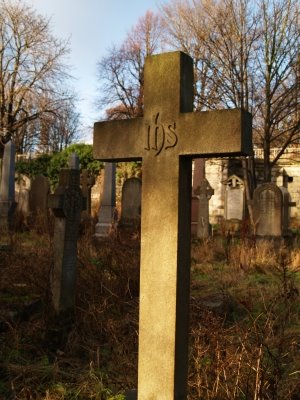
TombstoneAt the same time, we recognize that pastors may sometimes provide services “above and beyond” the norm. This may happen when one member of a wedding couple isn’t a member of his church. It also occurs when a pastor conducts a funeral for someone whose family worship elsewhere (or, sad to say, nowhere). Many want to provide a special “thank you” even if all those involved in a wedding or funeral are of the pastor’s flock.

Generally, honoraria are reserved for these special occasions. They likely take into account the time a pastor spends preparing an additional sermon plus counseling sessions with an engaged couple or additional visits made before and after a death. Also, our society tends to equate thankfulness with financial recompense. Even if a pastor adamantly opposes such a gift, those to whom he has ministered often would feel guilty if they didn’t give him “something.”

In this case, keep in mind that you owe nothing — this is a gift. However, in the case of a funeral or a memorial service, you have an extra resource. You can discreetly ask one or more funeral directors what is normal in your area. Often, families are given the opportunity to include such an honorarium as part of the total bill with the funeral home and people frequently ask funeral directors what they should give.

Pile of MoneyThese next comments don’t apply to your situation. However, others may come across this post, so I find myself compelled to include a caveat about pastoral involvement in “special” services. I think that I speak for most Christian pastors here when I emphasize that no gift is large enough to cause us to perform a marriage or funeral that goes against Scripture or conscience.

My previous comments about refusing to officiate funerals under certain circumstances can also be applied to weddings and other occasions where folks desire a pastor or a church for all the wrong reasons. We are not window dressing and improper participation equates in my mind to providing a fresh coat to the “whitewashed tombs (Matthew 23:27)” of these hypocrites.

And now my final, personal thoughts and feelings: Whenever someone asks me ahead of time how much they need to pay, I say, “Nothing.” If they press the issue, I tell them that if they must give me something, the amount is up to them. Whenever anyone presents me such a gift, I first say, “You don’t owe me anything.”

I usually hear an answer along the lines of, “I know, but....”

I If the giver insists, I respond, “Thank you very much.” I also say that I’ll “plow it back” into my work. This generally means that I add to my library or buy some new clergy apparel.

Related posts include Clergy Appreciation and Supporting Your Pastor

Scripture quoted from The Holy Bible, English Standard Version™, © 2001 by Crossway Bibles.

Send email to Ask the Pastor.

Walter Snyder is the pastor of Holy Cross Lutheran Church, Emma, Missouri and coauthor of the book What Do Lutherans Believe.

Technorati Tags: | | | | | | | | | | | | | | | | | | | | | | | | | | | | |

Newspaper column #567:3

04 May 2007

Are Funeral Services Necessary?


Q: In pre-planning for my own death, am I required by my religion to have an actual funeral? If I decide to be cremated and my ashes kept with my wife, do I need to plan a memorial service in order to comply with Christian or Lutheran beliefs that I’m not aware of? I know that it’s important for closure for family and friends in most cases. I believe in Jesus and find myself constantly asking him for forgiveness — more so as I get older and, I think, wiser. I daily try to be a better person. I haven’t spent much time in church over the last 20 years but my faith has not wavered and I speak to God on a daily basis. I have been trying to remember from my teenage years in Bible study about God’s attitude toward burial but nothing comes to my brain. I could use your guidance. Thank you in advance.

Horse Drawn HearseA: Almost every part of Christendom has some rite or routine for funerals and burials. Some remain fairly constant among confessions and denominations; others vary from congregation to congregation. I don’t know about all other bodies, but the Lutheran churches with which I’m familiar do not require funeral services or burial rites. As you note, however, they may be quite “important for closure for family and friends.”

More than “closure,” a Christian funeral proclaims to those we leave behind the death of Christ for our sins and His resurrection for our justification. The funeral and accompanying burial rite are intended to do much more than merely help the survivors let go of a loved one. The service emphasizes Baptism and Easter, encouraging the mourners to look beyond the grave to eternal life with Jesus Christ. I’ve not only preached this message but, through the death and burial of several loved ones, have received its blessed hope from the mouths of other pastors.

This message is also for you — for now and until the day you die. A true Christian congregation proclaims Christ in Scripture, sermon, and song; a true Christian regularly and joyfully participates in this gathering of saints. Remember also that even if your faith is strong, other worshipers do not have this luxury and even if they’re not going to do much to strengthen your relationship with God, God may call you to help them in their times of weakness.

WorshipAfter all, as baptized children of God, we join together to be encouraged and to encourage each other: “Let us draw near with a true heart ... with our hearts sprinkled clean ... and our bodies washed with pure water. Let us hold fast the confession of our hope.... And let us consider how to stir up one another to love and good works, not neglecting to meet together, as is the habit of some, but encouraging one another, and all the more as you see the Day drawing near. (Hebrews 10:22-25)”

Don’t plan for a “memorial service.” Plan instead for a confession of faith in Jesus Christ and a celebration of His resurrection as a foretaste of your own being raised from the dead. Don’t think of your funeral as a long maudlin farewell. Even through tears, your mourning family and friends will have this opportunity to focus on “Jesus Christ and him crucified (1 Corinthians 2:2)” if you make plans to allow your pastor to focus on life in Christ rather than on death, devil, and decay. As for your mention of cremation, let’s tie it in with the following two questions from others.

Search this blog for more on the topic of the funeral.

Scripture quoted from The Holy Bible, English Standard Version™, © 2001 by Crossway Bibles.

Send email to Ask the Pastor.

Walter Snyder is the pastor of Holy Cross Lutheran Church, Emma, Missouri and coauthor of the book What Do Lutherans Believe.

Technorati Tags: | | | | | | | | | | | | | | |

01 June 2007

The Pastor and Funeral Visitation


Q: I’ve been a senior pastor at my current location for three years now. Here is my question: How long should I stay at the viewing at the death of a lady in the church? Thanks.

The Reagan FuneralA: I don’t know if your church body, congregation, or region of the country have any special customs and practices. If not, I’d recommend that, whenever possible, you arrive before the viewing officially begins, when the family says they will gather. Of course, this isn’t always possible, since some previous commitments may outweigh even the beginning of a family’s visitation time. Occasionally, also, an emergency keeps a pastor away.

Anyhow, after extending condolences and visiting the departed saint’s coffin or urn, have a prayer and say a brief devotion or give a very short sermon for the family. You might, if you see a need, talk for a few minutes with any family members who appear to be particularly struggling, especially if they’re also members of your congregation. Leave when the situation seems right.

Some bodies give their pastors much more help in this area than do others. Most liturgical churches (those following the orders of service established in the early Christian Church) have for centuries used resources such as what we Lutherans call our Agenda. A full-featured agenda, suitable for use in the worship services, includes all the basic rites and ceremonies we use. These include ordinations, installations, inductions, baptisms, confirmations, marriages, and funerals.

My church body, The Lutheran Church — Missouri Synod (LCMS), also produced a scaled-down version that’s easier to take with us on the road. A new agenda was issued to accompany Lutheran Service Book, our newest hymnal. In keeping with previous issues, the LSB Agenda offers prayers, Scripture readings, and related material not only for the funeral but before and after. Meanwhile, the more portable Pastoral Care Companion focuses especially on those rites and ceremonies that may be held outside of the church building.

For hospital and shut-in visits, we have services of prayer, preaching, and Holy Communion. If death seems imminent, the pastor can speak and pray the “Commendation of the Dying” at home, hospital, nursing home, or wherever else. When meeting with the family for a first viewing at the funeral home, the Agenda and the Companion offer a rite of “Comforting the Bereaved.” Then follow the funeral and committal rites with various options, including the placing of the funeral pall. The Agenda also includes a special rite, “Burial for a Stillborn Child or Unbaptized Child.”

If your own church doesn’t offer such assistance, you check with the LCMS’s Concordia Publishing House or investigate similar materials from other bodies. Of course, some may worry that using printed, established rites destroys “spontaneity.” However, the Scripture options, the sermon(s), the pastor’s meetings with the family, and his relationship with the saint at rest allow us to tailor the entire funeral to the survivors’ needs according to our mutual memories of the departed.

Note: This response was updated to reflect the information supplied by Pastor McCain in the comments. I didn’t name the Pastoral Care Companion only because it’s not yet in my library. That will be taken care of once I get a few shekels set aside.

Send email to Ask the Pastor.

Walter Snyder is the pastor of Holy Cross Lutheran Church, Emma, Missouri and coauthor of the book What Do Lutherans Believe.

Technorati Tags: | | | | | | | | | | | | | | |

10 October 2005

Whose Funeral Do I Officiate?


Q: Why do some Lutheran pastors officiate funerals of people outside their congregations and others do not?

CemeteryA: Some few might act out of narrow-mindedness but many restrict funerals just as they do other rites of the Church to those sheep who are under their pastoral care. Normally, I will only officiate for members of my congregation, but will look at the circumstances before making a final decision. One thing I do is talk with their own pastor.

I will not give a Christian burial to someone who did not live as a Christian. Thus, if the person avoided his own church and pastor in life, I will not seem to condone this in death by presiding over the funeral. I have had funerals where the deceased wasn’t a member of my church, but for whom I provided pastoral care prior to death, or who were former members and whose family had ties to the church. At other times, I have had committals for former members whose funeral services had been elsewhere and whose bodies had been returned for burial.

Send email to Ask the Pastor.

Walter Snyder is the pastor of Holy Cross Lutheran Church, Emma, Missouri and coauthor of the book What Do Lutherans Believe.

27 January 2008

+ Asleep in Jesus: Melba Estelle Snyder +


MomMy mother, Melba Estelle Snyder, née Grossman, born 15 March AD 1929 in St. Louis, Missouri, died in Prescott, Arizona on Friday 12 January AD 2008.

Mom was raised in St. Louis and Belleville, Illinois, but spent a great deal of her adult life in Texas, Kansas, and the Southwest. She was employed over the years as a business secretary, a stewardess for TWA on the beautiful Lockheed Super Constellation, a church secretary, adult education instructor for the Navajo Tribe, and with the Santa Fe Railroad. Mom volunteered with the New Mexico Make-A-Wish Foundation, TWA Clipped Wings, the B-24 Museum (a part of the Pueblo Colorado Historical Aircraft Society’s Weisbrod Aircraft Museum), and various other organizations. She was a long-time NRA member who for years reloaded her own .357 Magnum bullets.

She was mother to Walter (Stephanie) Snyder, Paul Snyder, Timothy (Brenda) Snyder, Stephen Snyder, and Carla Marie (Andrew) Byars, Prescott, AZ. Her grandchildren are Tim’s sons Joshua (Dana) and Jason Snyder, Marie’s two children, and my daughters Courtney (Shawn) Foote and Laura. Josh’s daughter Adrianna and Courtney’s son Jared are her two great-grandchildren.

She was preceded in death by her parents, Roy and Augusta, née Lugge, Grossmann.
Memorials may be made to Make-A-Wish Foundation of New Mexico, Shepherd of the Hills Lutheran Church of Prescott, Arizona, or Holy Cross Lutheran Church, Emma.

Super ConnieShe divorced my father while I was in college and remained in the Southwest after Dad left for graduate school. While some of the attending memories hurt for years thereafter, my greatest feelings remain those of love. An only child, she figured out how to raise a sometimes rowdy brood of five. She and Dad were both avid readers and I cannot recall a time in childhood when she didn’t read to one or another of her little ones. When we vacationed, Mom sat in the front seat, turned sideways so the whole car could hear her reading Marguerite Henry horse stories, The Swiss Family Robinson, and other books.

She never forced any of us but because her reading piqued our interest, she taught all five of us to read before we entered school. She did so well that most of us were reading at a fourth to sixth grade level by the time we finished first grade. And though Dad was also our pastor, Mom shared much of the in-home religious instruction. She used a big chart and gold stars to map and reward our progress at memorizing Bible passages and the Small Catechism. Mom also appreciated poetry and insisted that we memorize poems, first of her choosing and later of our own. Because of her, I can still recite much from Tennyson, Poe, and others, including The Charge of the Light Brigade, El Dorado, The Raven, and In Flanders’ Fields. Because I retain these and other quality verses, I forgive her for also planting Joyce Kilmer’s Trees forever in my mind.

Andrew, her son-in-law and her pastor, preached Mom’s funeral sermon and led the celebratory service on Wednesday 16 January at Shepherd of the Hills Lutheran Church, Prescott, Arizona. Plans are now that I will conduct her interment this spring in Walnut Hill Cemetery, Belleville, Illinois.

Technorati Tags: | | | | | | | | | | | |

28 April 2008

Sermon: Funeral of Thekla Heuermann

MP3 Recording of the Sermon Celebrating
the Divine Homecoming of Thekla Heuermann
on 28 April AD 2008


Sermon Text: John 15:5 I am the vine; you are the branches. Whoever abides in me and I in him, he it is that bears much fruit, for apart from me you can do nothing.

Sermon Theme: Grafted, Grown, and Gathered

Readings: Psalm 23; Isaiah 27:2b-6;James 3:11-18; John 15:1-8, 11


Asleep in Jesus,
Thekla Anna Katharina Lindemann Heuermann
5 April AD 1916 – 24 April AD 2008


On 5 April in the Year of Our Lord 1916, our Creator granted a daughter to Ernest and Clara (Meyer) Lindemann of Union City, Oklahama. On the 26th of that month, by the hand of Pastor Oskar Burkhardt, she received the washing of water and the Word in Holy Baptism through Immanuel Lutheran Church of Union City, becoming a child of God and receiving the name Thekla Anna Katharina. Her family moved to the Concordia area, becoming members of St. Paul’s Lutheran Church, where she attended and graduated the parochial school. There, after instruction by Pastor Brust, she publicly confessed the Christian Faith on the 13th of April, 1930 in the rite of Confirmation and was admitted to her Lord’s altar to receive the life-giving gift of His body and blood. Thekla’s confirmation verse stands her well even in death, serving as the text of today’s sermon.

She met Edwin J. Heuermann, a member of Holy Cross Evangelical Lutheran Church, Emma, Missouri. They married on 20 March 1938 and she transferred her membership to Holy Cross. Each remained a member of Holy Cross until death.

Edwin and Thekla farmed for many years, finally moving into Concordia in 1973. God granted her many relatives and friends as she served the Lord in her vocation as wife, citizen, and Christian. However, sadness also touched her with the death of her only child, Nyla Kay, in 1952. She attended services at Holy Cross faithfully until her health became poor and remained active in worship at the Good Shepherd Home.

After leading her through several years of struggle with declining health, God blessed Thekla with a holy death, taking her home on 24 April in the Year of Our Lord 2008. Resting safe in the arms of Jesus, she awaits the resurrection of the dead and reunion with friends and family. These include her departed parents; husband; daughter; four brothers, Louis, Richard, Albert, and Theodore Lindemann; and one sister, Esther McDonald. They also number her surviving brother, Norvin Lindeman, of North Kansas City, Missouri and several nieces and nephews.

The Lord gives and the Lord takes away; blessed be the name of the Lord. We give thanks to God our Father through Jesus Christ, our Lord, for our sister Thekla.


Scripture quoted from The Holy Bible, English Standard Version™, © 2001 by Crossway Bibles.

To Ask the Pastor, send email to Ask the Pastor.

Walter Snyder is the pastor of Holy Cross Lutheran Church, Emma, Missouri and coauthor of the book What Do Lutherans Believe.


Technorati Tags: | | | | | | | | | | | | | | | | | | | | | | | | | | | | | | | | | | | | | | |

03 August 2006

+ George S. Robbert +

1 August AD 2006

George S. RobbertThe Rev. Dr. George S. Robbert died at the age of 81 in St. Louis on Tuesday, August 1, 2006, from complications of diabetes. Dr. Robbert was an ordained minister and held a PhD from Indiana University. He received his MDiv and STM degrees from Concordia Seminary, Saint Louis, Missouri. He was emeritus professor at Concordia Seminary, where he taught historical theology from 1975 to 2002.

He is survived by Louise Buenger Robbert, his wife of 45 years; one son, George Harold Robbert of Ft. Collins, Colorado; a cousin, George Henry Stiegler of Ellicott City, Maryland, a niece, Alison Bloomfield of San Francisco, California; and cousins in Mississippi and Louisiana.

The funeral service will be held at Saint Paul’s Lutheran Church, 12345 Manchester Road, Des Peres, Missouri on Saturday 5 August AD 2006 at 10:00 a.m. Interment will be Bellefontaine Cemetery. Visitation is at the Schrader Funeral Home, 14960 Manchester Road at Holloway, Ballwin, Missouri Friday 1-3 p.m. and 6-8 p.m., and at church one hour before services.

In lieu of flowers, memorials may be given to Concordia Seminary, 801 Seminary Place, St. Louis, MO 63105, designated for The George S. and Louise Buenger Robbert Endowment for Historical Theology, or the charity of your choice. Friends may sign the family’s on-line guestbook at schrader.com.

Speaking personally, I’ve lost a mentor, and a friend. Dr. Robbert was kind and godly man who fed my love of history, especially the history of Christ’s Church. I think that four members of my family took courses from him and he and my father were particularly close. He also for many years hosted the annual Texas party each year in his home on Faculty Row. Please pray for Louise (also Dr.) Robbert and the rest of the family.

Technorati Tags: | | | | | | |

04 October 2006

Burial Disagreement Brings Family Discord


Q: My parents have been in their graves for more than 20 years. Both were lifelong Lutherans. My brother-in-law has died recently, and been cremated. My sister wishes to bury his ashes in the plot where my parents are buried. Her reason is to save money. My brother-in-law was not a Christian. I understand that his ashes would be buried either between or on top of one of the graves.

Consenting to this troubles me and I am not sure why. If I refuse to write a letter of agreement to allow this, I am going against four older siblings who have already agreed. Is there an official Lutheran position on the practice of “double burials” or “over and under burials”?


HearseA: I don’t envy the position in which you find yourself. Death and burial have torn apart many families who previously were close-knit. As your question reminds us, distribution of the estate isn’t always the primary reason for post mortem family fights. Varying understandings of what is the “right” burial practice may get mixed up with differences in faith.

Preserving our memories isn’t always congruent with living in the present or rising into eternity. Pastors hear all sorts of requests for special music, memorials, or rituals at funerals. At times, these may collide with the solemn yet joyful nature of a Christian funeral service. We sometimes come off as “uncaring” or “unfeeling” because we must deny some of these requests in order to be faithful to Christ. At other times, while family choices aren’t the best testimonies to the Christian Faith and the beliefs of the departed, pastors allow them to stand without argument because what’s “better” theologically isn’t “best” in our ministry to a grieving family.

While it might make planning and conducting funerals easier, there’s never been a blanket policy for all of Lutheranism. Generally, we’ve done as have most churches in Christendom, opting for decency and good order and occasionally adapting some of our practices to suit local customs and practices. Even those congregations having strict written burial policies often allow some leeway for peculiar circumstances.

For instance, in low-lying coastal areas with groundwater near the surface, underground burials are impractical, since the coffins might float their way upwards. In such places, most people utilize above ground crypts and mausoleums. Many military cemeteries, because of space restrictions, only allow one plot for husband and wife. The first one to die is buried; when the second passes away, the grave is opened and the second coffin placed respectfully upon the first.

UrnIn addition, debate continues among Lutherans and other Christians over cremation. Some Lutheran cemeteries won’t allow the burial or scattering of ashes while others have specially dedicated areas to either house the urns above ground or bury them in the soil.

Multiple burials of themselves aren’t frowned upon, if space or financial circumstances warrant such actions. From what I’ve read, parts of Europe end up with numerous generations layered in their cemeteries. Markers are kept for a while, then removed and changed as the newer people are placed in the site. Many of these latter burials are not even related to those previously buried. While it’s not something to which most of us in the United States are accustomed, many European churches follow this practice without reservation, so long as they are allowed to bury their dead with dignity and in a Christian manner.

You don’t mention a few things. First of all, why, besides the financial reasons, does your sister want your brother-in-law to be buried with your parents? I’ve seen children interred beside or atop parents’ graves. However, unless your sister also plans to be buried above or between your parents, why would she leave your brother-in-law in such a place? Is this at least partially responsible for your conflicted feelings?

Also, is this a Christian cemetery or is it owned by private parties or a governmental entity? I ask because many Christian churches don’t allow the burial of manifest non-Christians in their cemeteries. They may have a dedicated area just outside the main grounds where those who gave no evidence of the faith can be buried near believing relatives. Probably most of those interred in these sites were suicides, since many believed that every person who killed himself was forever condemned. However, anyone else not deemed suitable for the hallowed ground could also end up there.

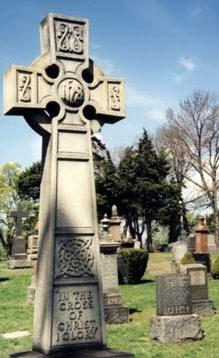
TombstoneHis faith (or lack thereof) may be a large — even the primary — reason why consenting is so difficult. You sound like someone who wants to live as a child of God and not do anything contrary to His will. Could you be troubled because you see a tremendous contrast between the faith of your parents and that of your brother-in-law? Could the mechanics of the situation (a double-burial) be obscuring what you should examine with the eyes of faith (Christian and unbeliever lying together in the grave)?

I pray that you’ll be careful in your discussions and prayerfully make a decision with which both you and your siblings can live. Make sure that your disagreement — even if informed by God’s Word and in line with His will — doesn’t cause others to enter into sin. Take care in deciding that someone else is truly an unbeliever, since Christ warns, “Judge not, that you be not judged. For with the judgment you pronounce you will be judged, and with the measure you use it will be measured to you. (Matthew 7:1-2)”

Be certain of your diagnosis of unbelief. Even if sure, your choosing to mention obvious differences in belief could throw gasoline on a smoldering fire. Your sister my not be comfortable looking too closely at her late husband’s lack of faith. She might feel guilty that she didn’t “try harder” to get him to believe. She may also may be struggling with her own faith as she tries to reconcile salvation through Christ alone with thoughts of Him judging her husband on the Last Day.

In his First Epistle, Saint Peter said, “Above all, keep loving one another earnestly, since love covers a multitude of sins. (4:8)” He reflects similar thoughts from Proverbs 10:12 (“love covers all offenses”) and 17:9 (“Whoever covers an offense seeks love”). Sometimes, the most loving act is resisting a majority so they don’t continue in their sin and risk eternal condemnation. At other times, we show the greatest charity by keeping silence, knowing that the wrong done by others is much less that the pain we could cause by speaking.

Judgment DayHow will you “keep loving” your family “earnestly”? What decision will cause the least discord, contribute to the truest peace, and bring the most blessing to your family? What decision most honors the God who loves you and the Savior who gave His life for you? Would your parents be more offended by being buried with an unbeliever or by knowing that their children were fighting bitterly? Remember that Christ lay in someone else’s tomb (see Matthew 27:59-60). As Isaiah prophesied would be done to God’s Suffering Servant, “they made his grave with the wicked and with a rich man in his death. (Isaiah 53:9)”

You must resolve in your own heart and mind how much it matters where or with whom our bodies sleep in death. Ashes, earth, and waters will all yield their dead and all believers will rise again. As you heard at their committals, you know the “sure and certain hope” with which your parents lived, in which they were buried, and by which they will rise. Focus on this hope and the Savior who is its source. Pray for His peace in Your life and ask Him to lead you to a decision which gives honor to Him while, if at all possible, also brings peace to your family.

NOTE: For a bit more on the burial of Christians and unbelievers, I invite you to read a previous post, Whose Funeral Do I Officiate?

Scripture quoted from The Holy Bible, English Standard Version™, © 2001 by Crossway Bibles.

Send email to Ask the Pastor.

Walter Snyder is the pastor of Holy Cross Lutheran Church, Emma, Missouri and coauthor of the book What Do Lutherans Believe.

Technorati Tags: | | | | | | | | | | | | | | | | |

04 May 2007

Are Cremations Allowed?


Q: Is cremation anti-Christian? Where in the Bible does it state you must be buried? I have found cremation mentioned in 1 Samuel 31:12, Amos 2:1, and 2 Kings 23:20. These sounded like statements rather than requirements.

Q: What are your thoughts on cremation? I would certainly not want to be cremated. No one was cremated in Bible times. Who started cremation, anyway?

Viking FuneralA: Cremation is ancient. It appeared in Hinduism, was practiced among the Greeks and Romans, and appeared in Asia, Northern Europe, and elsewhere. The corpses of Viking leaders were often laid in their longboats. The mourners pushed the boats out to sea and set them afire. While early Christianity did not expressly forbid it in most instances, burial of some sort was encouraged, in keeping with Jewish customs. It was formally forbidden in Western Europe by Emperor Charlemagne in AD 784.

During Old Testament times, only a criminal or crass sinner normally would have had his remains cremated (see Joshua 7:25; Leviticus 20:14; 21:9). Through Amos, the Lord pronounced judgment on Moab for several sins. The first He cites is that Moab “burned to lime the bones of the king of Edom. (2:1)” This indicates that Moab’s cremation of Edom’s king was the result of disrespect for the dead.

The Levitical commands closely follow a reference to the false god Molech (20:1-5). This association is easy to make when we remember that worship of Molech included fiery sacrifice of children. On this topic, you might be interested in reading Parshat Achrei-Kedoshim: Molech Worship from a contemporary Jewish commentary at Sedra Shorts.

UrnDuring the past few centuries, some atheists encouraged cremation to rebut the Bible’s teaching of a resurrection. This idea has faded in recent years. At the same time, more Christians have been reconsidering the option of cremation because of rising burial costs and the scarcity of cemetery plots in many urban areas.

Why we accept or reject a course of action is often more important than the action itself. Christians are neither commanded nor forbidden any particular funerary practices. Conscience, judgment, community standards, offense to others, and the witness our actions give must all be considered. I have conducted funerals involving both coffins and urns. I have seen remains placed in the ground, in underground and aboveground vaults, and on a bookshelf in a person’s home.

Of burial, the Christian Cyclopedia says, “Burial practices are usually associated with conceptions of life, nature of soul, death, and hereafter. But customs are often preserved when beliefs and practices change. Fear, love, and awe are attitudes of the living toward the dead and determine burial practices.”

The ResurrectionRemember, too, that ours is a God of the living, and that all the dead in Christ are alive forever through Him. It doesn’t matter whether buried, cremated, lost at sea, or alone in a barren desert. God will raise up all the dead and will give eternal life to all believers in Christ.

Related information may be found in the previous post.

Burial quote from the Christian Cyclopedia, © 1954, 1975, 2000 by Concordia Publishing House.

Scripture quoted from The Holy Bible, English Standard Version™, © 2001 by Crossway Bibles.

Send email to Ask the Pastor.

Walter Snyder is the pastor of Holy Cross Lutheran Church, Emma, Missouri and coauthor of the book What Do Lutherans Believe.

Technorati Tags: | | | | | | | | | | | | | | |

29 April 2009

More Sermons Uploaded

Here’s another round of homilies posted at Happenings:

Humble Greatness
   Matthew 18:1-20
   Pentecost 17 — Proper 18
   7 September 2008

Uplifted
   John 12:20-33
   Holy Cross Day
   14 September 2008

Pastor Walter SnyderDressed in Love
   Colossians 3:12-19
   Hurt-Seibert Wedding
   20 September 2008

Sweet Lamentations
   Ezekiel 2:8-3:11
   Saint Matthew
   21 September 2008

Sinners Before “Saints”
   Matthew 21:23-32
   Pentecost 20 — Proper 21
   28 September 2008

Shamelessly Righteous
   Romans 1:16-17
   Funeral of LaVerna Meyer
   1 October 2008

Respect the Son
   Matthew 21:33-46
   Pentecost 21 — Proper 22
   5 October 2008

Come, Join the Feast
   Matthew 22:1-14
   Pentecost 22 — Proper 23
   12 October 2008

What Is God’s?
   Matthew 22:1-14
   Pentecost 23 — Proper 24
   19 October 2008

Technorati Tags: | | | | | | | | | | | | | | | | | | | | | | | | |

13 July 2007

Another Question on Cremation


Q: My brother suggested that I read your previous comments regarding cremation to help ease my conscience — now troubled after reading a review of Dust to Dust or Ashes to Ashes by Alvin Schmidt. My opinion was that cremation was an option for Christians but this review gave me pause. I asked my pastor brother whether he had seen this book review and what he thought about it, given that our mother has expressed her desire to conserve funds that may be left after the Lord calls her home, so that she may pass on a larger inheritance.

I read your commentary and now wonder if perhaps you have read Schmidt’s book or have seen this review. Are you fully persuaded that the Lord’s judgment on Moab was due in part because Moab did not respect the dead? Do other passages in Scripture teach us that we should show respect for the bodies of the dead? Is it possible that this text in Amos actually tells us what God thinks about the practice of cremation?

I ask these questions sincerely out of genuine concern for what my brother and I should do for our mother. If I understand your thinking correctly, the reason for a burial practice is more important than the actual practice itself. While I would agree that good practices can be done with a false heart, I am not sure that sincerity of heart makes bad practice good.

Your argument seems to be that cremation is neither commanded nor forbidden. If so, then the reasons for using this option, along with avoiding giving offense to the weak brother, are the primary determinants. But if God is not pleased by the practice of burning the body, then our protesting that we did it with sincerity of heart won’t count for much.

Please consider my questions, especially Schmidt’s arguments. Either I am the weak brother with a stricken conscience or my conscience is correctly informed and the practice of cremation is wrong. Either way, I confess that our Lord will raise up me and all the dead and will give unto me and all believers in Christ eternal life. This is most certainly true.


UrnA: I haven’t read the book but did read the review (Concordia Theological Quarterly Vol. 69 July/October 2005) — well before I wrote the previous column. While I respect Dr. Schmidt’s education and have learned much from reading his books and articles, I still think that he was wrong to categorically condemn all cremations. Personally, I prefer the idea of burial but if cremating my remains becomes a necessity for my heirs, I don’t think they’ll sin by doing it to what’s left of me.

While no passage of Scripture specifically says, “Thou shalt honor the corpses of the dead,” a number of readings point toward respect and order during the whole funeral process. Cremation itself wasn’t specifically forbidden by Mosaic Law although it was used as judgment upon crass sinners (see Leviticus 21:9 and Joshua 7:25). Josiah, one of Judah’s truly righteous kings, likewise used cremation to punish priests who’d offered pagan sacrifices during the reign of Jeroboam. He dug up and burned the bones of the corpses and “sacrificed all the [living] priests of the high places who were there, on the altars, and burned human bones on them. (2 Kings 23:16, 20)” As for Moab, I’m certain that the condemnation was for their intent more than for their specific action because this nation wasn’t under the Law of Moses.

GamalielMy sources indicate that sometime around the time of Christ, Rabbi Gamaliel decried the excess spending at funerals. His dictate that the ornate and costly wrappings some used be replaced by simple linen garments remains part of traditional Jewish funerary customs to this day. Many Jewish funerals still include emptying a cup in Gamaliel’s honor at the post-burial meal.

Judea and Galilee both kept their burial places outside the cities, forbad using cemeteries as pastures, and ordered that no roads nor watercourses run through them. Hired mourners and flute players were quite common, as well. However, in Judea, they went before the bier; in Galilee, they followed. In most funerals, as we see so clearly in the procession at Nain (Luke 7:11-15), the women led the procession. This custom came from an ancient Jewish commentary that said women should go first because a woman brought death into the world.

The Raising of LazarusThe customs noted in the Gospels, such as the linen wrappings and face cloths belonging both to Lazarus (John 11:44) and Jesus (20:5-7) are likewise well-attested by other sources. So also the use of ointments and spices, both to honor the dead and to cover the stench of death in a time of no refrigeration or embalming.

Because contact with the dead made one ritually unclean, people wouldn’t casually come into contact with the dead nor with their burial places. However, carrying the bier was a privilege. A considerable number of people might serve as pallbearers during the procession, accepting the burden as an honor.

From Genesis onward we can read of burial customs, some which continued, others which fell by the wayside. For example, the preference throughout most of the Scriptures was to bury or entomb family members closely together. Normally, only distance prevented this and the family might later move the remains to a family plot.

Sarah EntombedWe see particularly in the family of Jacob how families remained together, even in death. Sarah and Abraham were both laid in the cave at Machpelah. Although he died in Egypt, Jacob’s remains were returned to the cave of Machpelah (Genesis 49:29-50:14). His son Joseph died in Egypt but made his family swear to take his bones with them when God took them “to the land that he swore to Abraham, to Isaac, and to Jacob. (50:24)” Over four hundred years later, Israel kept this promise. “Moses took the bones of Joseph with him. (Exodus 13:19)” Under Joshua’s leadership, Israel took “the bones of Joseph” and “they buried them at Shechem. (Joshua 24:32)”

While specifics varied among times and places, God’s people almost always followed certain rituals. Showing respect and sorrow might include tearing one’s clothes, wearing sackcloth and ashes, loud crying, and musical dirges. Normally, burial was on the same day, but some bodies remained in state longer. Certain haircuts, beard trims, and the like which were normally forbidden were allowed to most mourners, save the High Priest and those under the vows of a Nazarite.

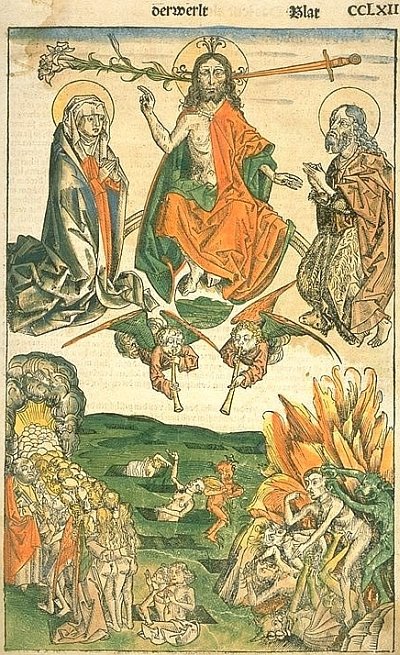
The Last JudgmentStill, however, all of Scripture contains no “now and forever” command for Hebrews and Gentiles to always act exactly in one manner when dealing with the dead. At the same time, our burial practices should confess to each other and to the world our belief in the bodily resurrection of the dead, just as the Small Catechism so clearly states: Our Lord “will raise me and all the dead, and give eternal life to me and all believers in Christ. This is most certainly true.”

You correctly note that we dare not sin against the “weak person” and afflict his conscience (1 Corinthians 8:11-12). If the thought of cremating your mother leads you to sinful doubts, then you should not do it. If you and your brother can do so in good conscience before God and the rest of your family, I still see no reason not to.

Meaning of the Third Article of the Apostles’ Creed quoted from Luther’s Small Catechism, © 1986 by Concordia Publishing House.

Scripture quoted from The Holy Bible, English Standard Version™, © 2001 by Crossway Bibles.

Send email to Ask the Pastor.

Walter Snyder is the pastor of Holy Cross Lutheran Church, Emma, Missouri and coauthor of the book What Do Lutherans Believe.

Technorati Tags: | | | | | | | | | | | | | | | | |

02 May 2011

A Loving God in a Disaster Filled World

From the Archives

I thought this a good time to bring this question out of the archives as we continue our Easter celebration even in the aftermath of earthquakes, tsunamis, and killer tornadoes.

Q: Why do evil things happen to good people?

A: This question comes to pastors more often than almost any other spiritual query. As I visit sick and, especially, dying people, I ask, too. Why this saintly person? Why not that other “not-so-good” person?

Heart BeatOthers’ (or my own) pain and suffering reminds me of my grandparents’ deaths. One grandfather died slowly, fighting for breath as emphysema overtook him. The other went suddenly with a massive heart attack. Prepared for the first, our family’s pain and shock was lessened somewhat. Similarly, one grandmother died of liver cancer, which filled her body with pain. Near the end, every little movement of the hospital sheets across her skin brought agony. The other slipped quietly away in her sleep. Again, the family’s pain was lessened in the former’s passing, since we had time to prepare and to begin our mourning while she was still with us. But her own physical pain was much greater.

Searching the Scriptures, we find the basics: Pain, suffering, and death entered the world because of Adam’s fall into sin. Each of us earns the “wages of sin,” which, Paul reminds us, “is death. (Romans 6:23)” Each of us faces toil and hardship, whether physical, emotional, mental, or spiritual.

While we know this by faith and by intellect, the specifics bother us. And comparisons — a form of unscriptural judging — often trigger our problem: Why did the most overtly God-fearing, practicing Christian among my grandparents suffer the most painful death? Why did she, years before, have to watch her husband slowly strangle under his failing lungs?

CoffinThese events can cause even strong believers to ask, “God, why’d You do this to such a saint instead of to that sinner down the street?” Why do we sometimes still cry over memories, years after a final hospital visit, long after a coffin was lowered? It’s not fair, is it? When we get in God’s face and start yelling our rage, our pain, our frustration, where’s our answer? Why doesn’t He give us a clear sign?

Maybe, though, He already has; perhaps He even gave us multiple signs, if we would only remember where to look and how to see.

Look first at Job: Remember his terrible suffering. Remember also a God who basically says to this righteous man (and to us): “Mind your own business. When you’re God, then you can make the rules.” We keep running up against One who says, “My thoughts are not your thoughts, neither are your ways my ways. (Isaiah 55:8)” The Psalms are likewise full of laments at personal or societal suffering, when no end seems in sight. Yet when we look closer, we see hope glimmering. These same Psalms which complain about the pain also say, “Yet will I still praise God.” And so will we.

God sometimes uses suffering as a teaching tool. Pain may turn us from what is unnecessary or wrong to Him who is truly the One thing needed. He even uses our afflictions to draw attention and praise to Himself. Remember the healing of the man who was blind from birth in John 9. Jesus was asked whose sin it was that caused the blindness: Was it the parents’ fault, or did God anticipate a future infraction in the man and punish it in advance? Neither, is what Jesus said. This happened so God could be glorified, said the Savior — who then proceeded to heal the man.

Ultimately, we’ll never have a full answer in this life as to why bad things happen to good people — with one great exception. Otherwise, even the beauty of the Easter Gospel at a funeral, even all the other Bible words of hope and consolation sound trite and hollow when our pain is so great. The exception is in the totally unwarranted agony of Jesus. “Surely he has borne our griefs and carried our sorrows.... He was wounded for our transgressions; he was crushed for our iniquities; upon him was the chastisement that brought us peace, and with his stripes we are healed. (Isaiah 53:4-5)”

Caravaggio's Disbelieving ThomasWe know why He suffered. He paid the price demanded for our failure. His loss was our gain, His pain our pleasure, His agony our ecstasy. Sitting in the rubble of his life, Job could still look forward to his Savior’s day and say, “I know that my Redeemer lives, and at the last he will stand upon the earth. And after my skin has been thus destroyed, yet in my flesh I shall see God, whom I shall see for myself, and my eyes shall behold, and not another. My heart faints within me! (19:25-27)” The hymn based on this Scripture concludes: “He lives, all glory to His Name! He lives, my Jesus, still the same. Oh, the sweet joy this sentence gives, ‘I know that my Redeemer lives!’”

He lives, and because He lives, we shall live also (cf. John 14:19). In the worst of times, we know we have One on our side who’s already faced the same terrible pain, who’s already shouldered the same staggering load, and who’s already crushed sin, death, and devil beneath His almighty foot. He is the clear Sign that God loves us. He has shown us the height and the depth of His love for us. “All glory to His Name!” Amen.

Search this blog for related columns, including Why Suffering and Death?

Scripture quoted from The Holy Bible, English Standard Version™, © 2001 by Crossway Bibles.

Send email to Ask the Pastor.

Walter Snyder is a Lutheran pastor, conference speaker, author of the book What Do Lutherans Believe, and writer of numerous published devotions, prayers, and sermons.

Technorati Tags: | | | | | | | | | | | | |

Expanded from newspaper column #15

02 April 2008

I Am Not Making this Up

Questions about God and Man

Since I must work ahead, last week’s Concordian newspaper went without this column because of a combination of factors. These included preparing a Thanksgiving Day service, a funeral, a regular Sunday service, and my contributions to the Holy Cross newsletter. We also took a “vacationette” to visit our St. Louis family. Topping it all off, as I worked on various bulletins and articles, my computer kept restarting itself. So not only did I not have time or computer to write for the paper, when the repair people fixed me up, an avalanche of email poured into my home. Amongst all the spam and the legitimate messages, I found the following questions.

Some people can’t resist sweet snacks. Others stumble over salty foods. One of my extreme addictions is to out of the ordinary, off the beaten path items, situations, or people. I cannot judge the sincerity of the author and don’t know if these questions were written to seek edification or just to challenge Christianity but I can’t not reply. While I often clean up spelling, grammar, and the like, I’ll leave these as I first found them but will use [brackets] to note any corrections or comments.

1. What does GOD Look like?

He looks however He pleases. He can take any form He chooses and can conceal Himself completely or cloak His presence in various physical objects, as He did with the burning bush (see Exodus 3). Daniel and Revelation contain the most complete descriptions of His form. However, He doesn’t tell us if this is his ordinary appearance or if it was provided in order to allow sinful humans to look on Him and live.

2. Where does GOD live?

While we speak of God in heaven, we have no real concept of what heaven is like, let alone what composes its essence. Perhaps the best we can do is to say, “Heaven is everything immediately surrounding the presence of God.” He is also omnipresent, saying, “‘Do I not fill heaven and earth?’ declares the Lord.” (Jeremiah 23:24)” Yet He also locates Himself specifically in certain spaces and times. Among the Israelites, He chose tabernacle (Exodus) and temple (1 Chronicles) as His established dwelling places, although He never ceased filling “heaven and earth.” In these structures, He specifically reserved the Most Holy Place (Exodus 26:33-34; 1 Kings 8:4-7) for Himself, claiming the Mercy Seat of the Ark of the Covenant (Exodus 37:1-9) as His earthly throne, normally allowing entry only to the High Priest on the Day of Atonement (Leviticus 16).

3. In whose Image were we created?

The Scriptures specifically tell us, “God created man in his own image, in the image of God he created him; male and female he created them. (Genesis 1:27)” Let me hasten to add, however, that the Bible doesn’t demand that we think of this “image” as an exact physical reproduction. If that were the case, then Adam and Eve would have been completely indistinguishable, since “in his own image” God created “male and female.” Nor did man reflect God according to many of His attributes. For example, Adam could not be present everywhere at once and couldn’t bring new things into being with a word. Instead, God made our first parents like Himself in perfect holiness.

This image was distorted beyond recognition when Adam sinned. Since that time, mankind inherits only a twisted fragment of the Lord’s true image. God chose to address this horrible, damnable condition by restoring His image among us in the person of His Son, which leads us to your next question.

4. Did Jesus Come in GOD[’]S image or ours?

Throughout eternity, God’s “only Son” (John 3:16) is, was, and will be completely “God over all. (Romans 9:5)” By His miraculous conception, He became and remains “the man Christ Jesus (1 Timothy 2:5). Saint Paul plainly spoke of “Christ, who is the image of God. (2  Corinthians 4:4)” In part, this was an image like that of Adam and Eve before the Fall. However, “in him the whole fullness of deity dwells bodily (Colossians 2:9)” and His image includes “all authority in heaven and on earth. (Matthew 28:19)” While He can restore earthly life (e.g., John 11:1-44), He more importantly gives “eternal life to all whom [the Father has] given him. (John 17:2)”

According to His humanity, Jesus’ image changed as He grew and developed physically and intellectually. Closing the infancy narrative, Luke noted that “the child grew and became strong, filled with wisdom. And the favor of God was upon him. (2:40)” After recording Jesus’ visit to the temple when He was twelve, Luke then wrote, “Jesus increased in wisdom and in stature and in favor with God and man. (2:52)” His image also changed because of external forces. Fulfilling the prophecy of Isaiah 52:13-53:12, Jesus’ torture and crucifixion gave Him an appearance “marred, beyond human semblance” and a “form beyond that of the children of mankind. (52:14)”

5. If the intellectual beings on this planet which is as we know it are us known as humans, if we looked like squirrels standing six feet tall and walking on two hind legs and spoke a language just as we do now in what image were we created?

In that of God, for again, it’s not the physical appearance that defines God’s image.

Scripture quoted from The Holy Bible, English Standard Version™, © 2001 by Crossway Bibles.

To Ask the Pastor, send email to Ask the Pastor.

Walter Snyder is the pastor of Holy Cross Lutheran Church, Emma, Missouri and coauthor of the book What Do Lutherans Believe.

Technorati Tags: | | | | | | | | | | | | | | | | | | | | | | | | | |

Newspaper column #530